Agricultural Drone Market to Grow Nearly Sixfold by 2036, Report Finds
A new Fact.MR forecast projects the agricultural UAV market to rise from USD 5.79 billion in 2026 to USD 33.6 billion by 2036 at a 19.2% CAGR — a clear signal that spray and scouting drones are now long-term farm infrastructure, not a passing trend.
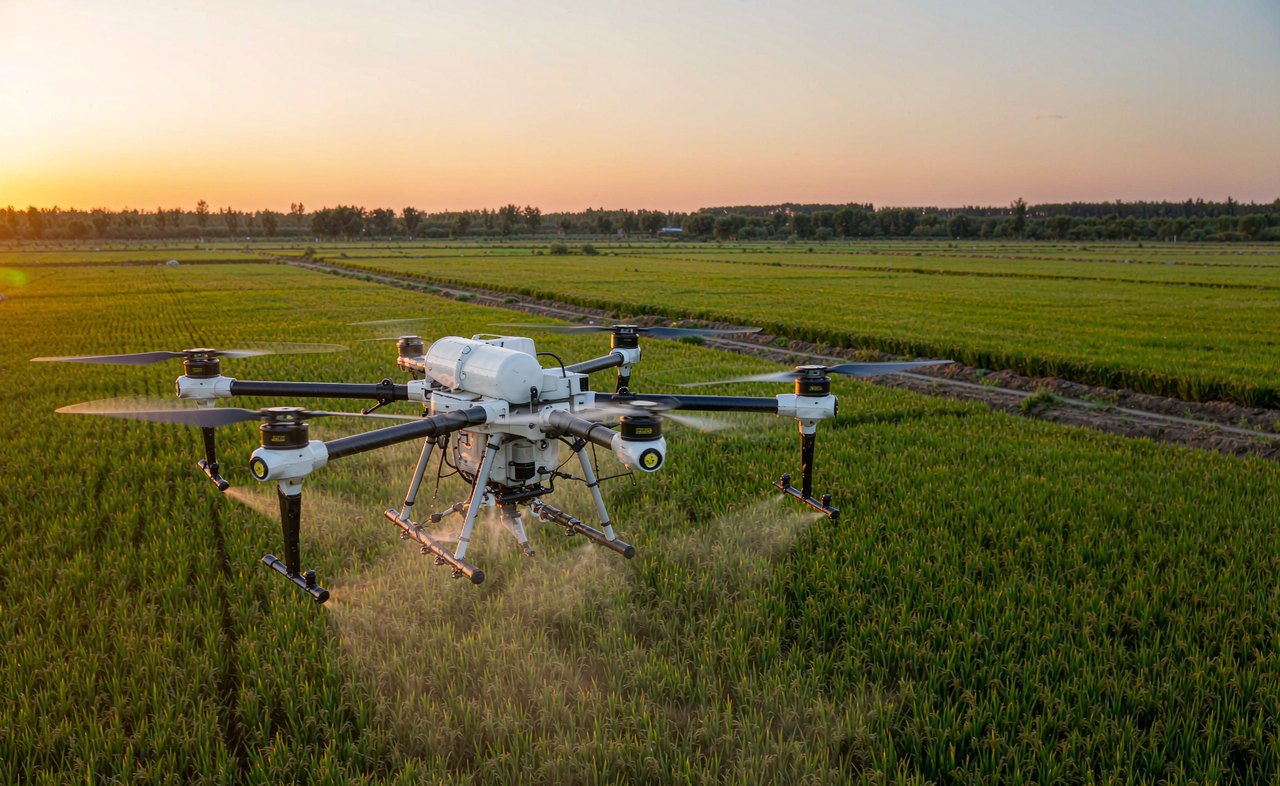
The Numbers Behind the Forecast
The report, updated on 23 October by market research firm Fact.MR, puts the agricultural UAV market at USD 4.86 billion in 2025 and an estimated USD 5.79 billion in 2026, before charting growth to USD 33.6 billion by 2036. That is roughly USD 27.8 billion of new market value created over the decade, at a 19.2% compound annual growth rate. For context on how fast the installed base is already expanding: DJI reported more than 600,000 agricultural drones operating globally by the end of 2025, and that fleet keeps growing as spraying, crop monitoring, and seeding missions move from pilot projects into routine farm operations.
Rotary-Wing Platforms Dominate — and Hardware Leads the Spend
By product type, rotary-wing systems hold a 58.2% share in 2026 — a reflection of how well hovering and low-speed flight fit field inspection and precision spraying. By application, crop monitoring leads with a 33.9% share. By component, hardware accounts for 52.9%, meaning airframes, motors, ESCs, propellers, and sensor systems remain where most of the money goes. On the demand side, farmers themselves represent 45.0% of end users, with agricultural contractors and cooperatives making up the rest.
Growth Is Not Spread Evenly
The forecast's regional growth rates tell their own story: the United Kingdom leads at 23.7% CAGR through 2036, followed by Brazil at 23.0%, Japan at 20.1%, the United States at 16.6%, and Germany at 13.6%. Brazil's growth is driven by contractor operations across vast crop areas, Japan's by acute farm labor shortages, and Europe's by maturing precision-agriculture services. Buyers planning export or distribution should note that demand drivers differ by region — labor economics in Japan, scale in Brazil, service maturity in Europe — and a one-size-fits-all pitch rarely lands in all three.
What It Means for Buyers and Component Planners
For fleet operators and OEM buyers, the practical takeaways are straightforward. First, a forecast horizon this long signals durable demand for parts: spray drones work in dust, chemical mist, and constant takeoff-and-landing cycles, so motors, arms, and propellers behave like consumables with recurring replacement demand.
Second, with hardware taking over half of component spending, power-system quality is a genuine differentiator — a matched motor, ESC, and propeller set cuts downtime and protects tight spray windows. Third, buyers who lock in supplier relationships and spare-part sources before peak season consistently pay less than those who scramble mid-season. The bottom line: the next decade of agricultural drone growth will favor fleets and suppliers who treat the powertrain as serviceable infrastructure, not disposable hardware.
- P60 Agricultural Motor ArmPower arm for medium-size agri spray drones
- P80 Agricultural Motor ArmHeavy-lift power arm for large agri spray drones
Source: Fact.MR — original report. This article is Aerotora's independent analysis, written for drone fleet operators and component buyers.
Aerotora specifies motor + ESC + propeller as tested sets under your own brand. MOQ 1 set, 72-hour dispatch on stock models.