Shandong Writes the Spray Drone Rulebook: 19,000 Aircraft, 200 Million Mu a Year
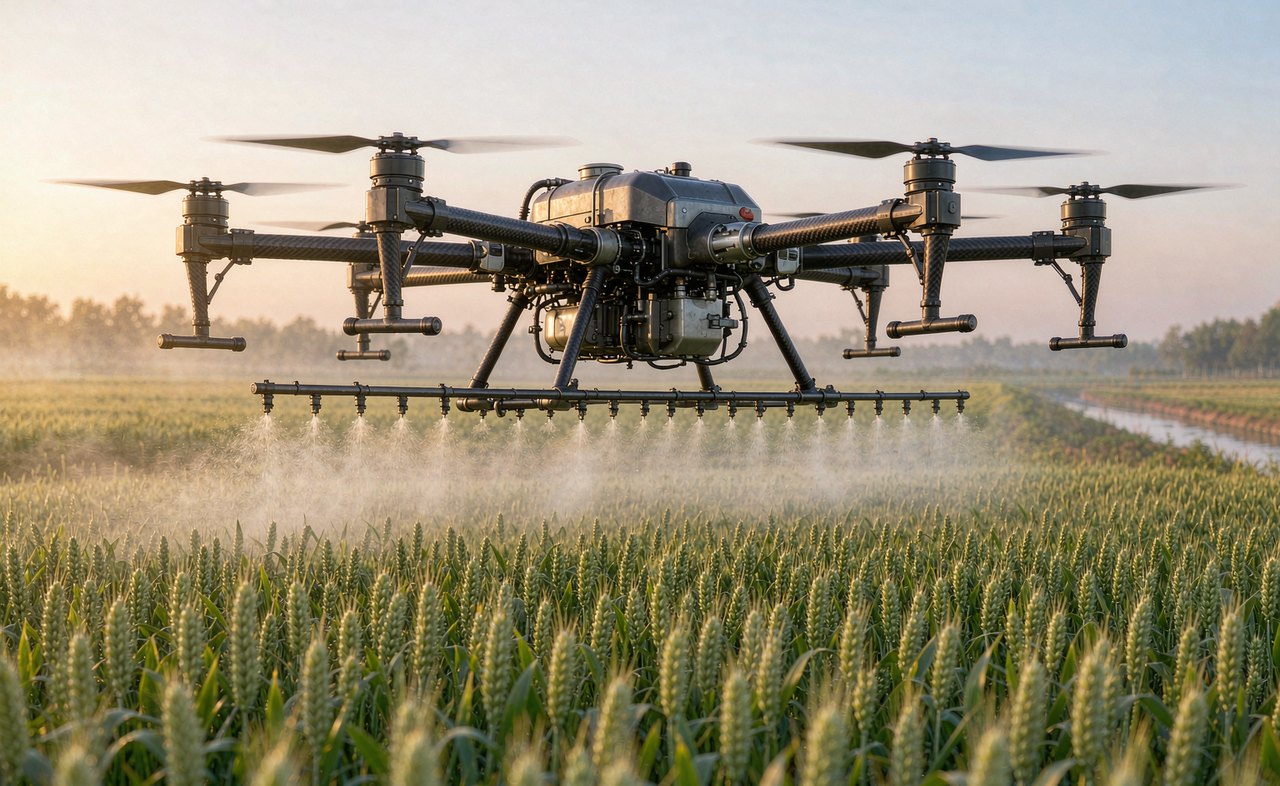
At the 33rd Shandong Plant Protection Fair in Jinan, a provincial extension official put hard figures on China's largest spray drone market: more than 19,000 aircraft, about 200 million mu-times of work a year, and now standard flight heights and speeds by crop stage, plus a negative list of spraying situations.
What was actually announced
The fair opened on 30 October at the Jinan Yellow River International Convention Centre: two days, nine halls, roughly 1,000 exhibitors and more than 60,000 trade visitors on the first day. Among the four expert reports on opening day, Dr Yu Xiaoqing of the Shandong Agricultural Technology Extension Centre spoke on the standardized application of spray drones.
Her figures: the province's fleet has passed 19,000 aircraft and flies about 200 million mu-times a year, which makes drones the main tool for coordinated pest control in the province. Joint field trials on wheat, corn and peanut have pinned down flight height and operating speed for different growth stages, and Shandong has published a negative list for aerial spraying.
Fixed parameters are a powertrain question
For anyone specifying motors, ESCs and arms, a standard flight height and speed is not a bureaucratic detail. It converts a vague mission into a repeatable duty cycle: the same altitude band, the same ground speed, the same spray rate, hundreds of cycles a day.
That is exactly the condition under which continuous ratings matter more than peak thrust. A powertrain sized on a bench burst number runs hotter than expected once the airframe is locked into a fixed low-altitude profile in summer heat with a full tank.
The negative list is a spec, not just a ban
A negative list tells operators when not to fly: wind, temperature, sensitive neighbouring crops. Read from the procurement side, it narrows the envelope a machine has to survive, but it raises the bar on control response, because drift management is a flight-behaviour problem before it is a nozzle problem.
Expect buyers to ask harder questions about yaw authority, gust rejection and how quickly an aircraft settles after a turn at spraying speed.
Run the utilisation math
Divide one figure by the other and you get roughly ten thousand mu-times per aircraft per year. That is a fleet flying like a tractor, not like a camera drone, and at that cycle count arms, motor bearings and propellers behave like consumables.
This is where the aftermarket lives. High-cycle spray fleets replace structure and power hardware on a schedule, and the province that publishes operating standards is also the province that will document service intervals.
What to do with this
Ask suppliers for continuous-duty curves at your real spray height and speed, not just maximum thrust. Check corrosion protection on anything exposed to tank mix. And when a province publishes standard parameters, test your airframe against them before the season starts, not during it.
Shandong is one province, but extension centres read each other's work, and operating standards travel faster than subsidies.
- LX-P60-X Agricultural Motor ArmAgricultural power arm for 22-30in spraying platforms
- LX-P80-X Agricultural Motor ArmHeavy-duty agricultural power arm for 40L+ spray drones
Source: CNR (CNR.cn), reporting Farmers' Daily — original report. This article is Aerotora's independent analysis, written for drone fleet operators and component buyers.
Aerotora specifies motor + ESC + propeller as tested sets under your own brand. MOQ 1 set, 72-hour dispatch on stock models.